Whoa! I remember the first time I tried to trace a token swap on Solana. It felt like reading a receipt from a different planet. My instinct said something was off about the UX of early explorers. Initially I thought all explorers were basically the same, but then I realized the difference comes down to data structure and how quickly you can act on it. Here’s the thing.
Token tracking on Solana isn’t just for traders. It’s for devs, auditors, NFT collectors, and anyone who wants certainty about on-chain actions. Short term traders need latency and clear mempool signals. Medium-term strategists want historical liquidity snapshots and owner concentration. Long-term holders care about provenance and unusual account behavior that hints at rug pulls or airdrop harvesting—and yeah, those things happen. I’m biased, but a good explorer saves you time and often money.
Okay, so check this out—one of the tools I keep in my browser toolbar is a dedicated Solana explorer with token-level analytics. It surfaces token holders, transfer frequency, and whether a token lives across a handful of big wallets or is fairly distributed. Seriously? Yes. When you can see wallet concentration in a couple clicks, you reduce a lot of guesswork. On one hand that clarity feels liberating; on the other, it makes you paranoid in the nicest way. Hmm…
Here’s how I typically use a token tracker in real workflows. First, I check token metadata and total supply. Then I scan for large transfers or spikes in transfer count—those are red flags. Next I look at holder distribution charts and top wallets. Finally, I drill into recent transactions to find patterns: repeated tiny transfers to many accounts can mean bot distribution, while clustered big moves often mean whales repositioning. Actually, wait—let me rephrase that: I usually repeat steps as needed, because the first glance rarely tells the full story.
Why solscan stands out for token analytics
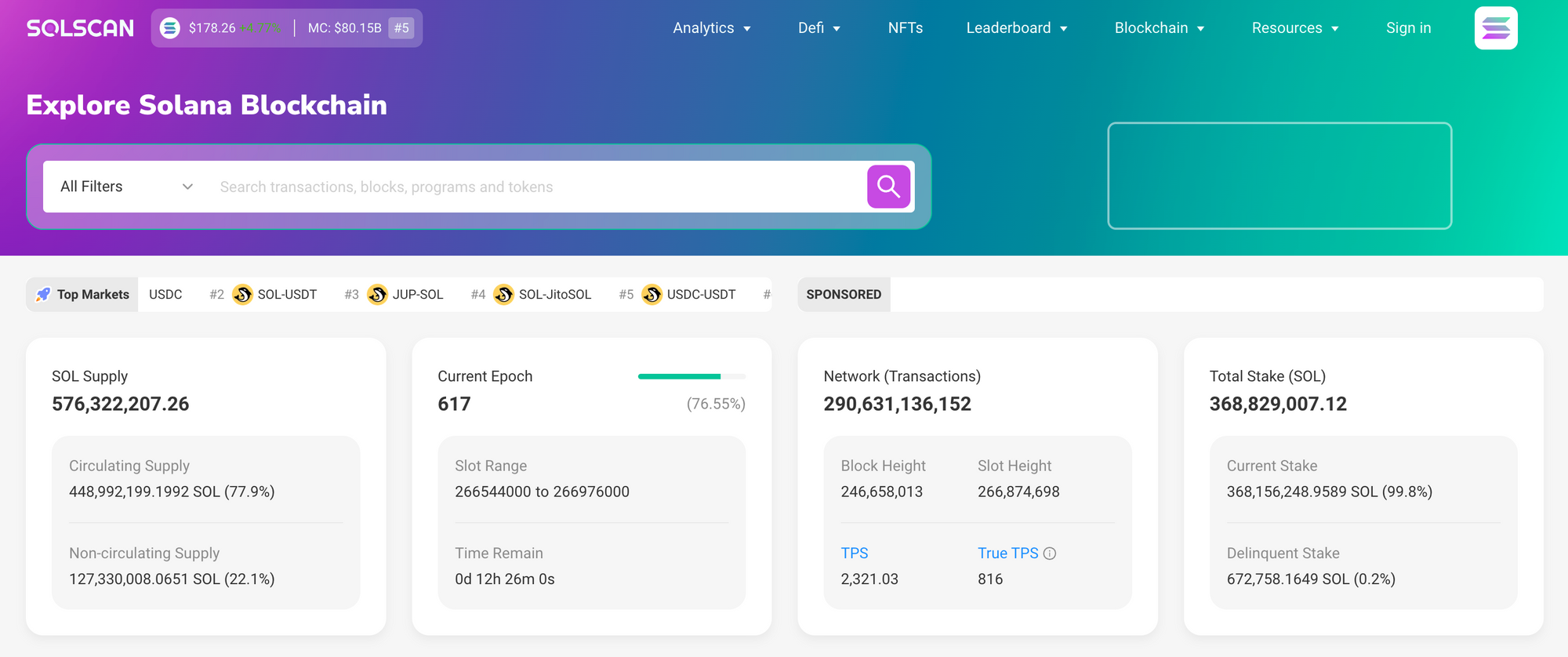
I’ve used multiple explorers, and one thing that keeps pulling me back is how fast and focused some interfaces are about token data. If you want a place to start, try solscan—it’s not the only option, but it nails the basics you actually use. Short story: you get token pages with holders, transfers, and supply breakdown, plus transaction-level context. Medium story: the tools for filtering historical transfers, exporting holder lists, and tracing token mints are practical. Long story—well, the long view matters when you audit contracts or follow laundering patterns, because a chain of small transfers can mask a single intent that only becomes visible after careful aggregation.
What bugs me about some explorers is the clutter. Too many panels, too many charts, and half of them are decorative. Good analytics are lean. They answer a question in under ten seconds. They also let you pivot: change time range, isolate wallets, export CSVs. I’m not 100% sure about every data point—on-chain metadata can be messy—but having the right tools makes messy manageable.
Practical tips when using a token tracker. First, trust the transaction history over token labels—labels can be wrong. Second, check mint authority and freeze authority if you care about supply risk. Third, look for repeated transfers to new wallet addresses in short periods; that pattern often indicates distribution bots or wash trading. Fourth, cross-reference program IDs in transactions—if a program you don’t recognize shows up a lot, dig into it. On the surface, it’s rote. Under the hood, these checks separate naive bets from informed positions.
I’ve saved myself from losing good money by spotting one simple pattern: a token with a nice chart but three wallets holding 90% of supply. That was a hard lesson. So now I make that concentration check a habit. Sounds small, but habits matter. (oh, and by the way…) If you’re building tooling or a dApp, expose holder distribution via API. Users will thank you. Very very important.
How to read the key token pages
Token overview: look for total supply, circulating supply, and mint info. Short and sharp. Transfer list: review timestamps and program IDs; large clustered transfers deserve special attention. Holder list: sort by balance, export when needed. Transaction detail: expand logs to see invoked programs and inner instructions; those tell the story beyond the surface event. Logs can be daunting, though actually they’re where the truth lives.
For developers and auditors, token trackers are also a debugging aid. When a user complains about missing tokens, you can trace whether the mint ever sent to the target wallet. If something went through the wrong program, transaction logs and instruction trees reveal the path. On one audit I remember, we found a vesting schedule executed through a custom program that didn’t surface in the basic token transfer list—only the inner instructions showed it. That was a subtle one, and it cost the devs time to fix.
There are limits. Token trackers read what’s on-chain; they can’t tell you off-chain intents or private agreements. They can’t fully prevent scams. They also sometimes lag on new program standards or exotic token models. Expect a little friction. My experience says: combine explorer insights with community sources and contract reading. Together they form a pretty good picture.
Quick checklist before trusting a token:
- Verify mint and freeze authorities.
- Scan holder concentration and top transfers.
- Check for unusual program IDs in recent transactions.
- Export holder lists when needed for deeper analysis.
- Use transaction logs to inspect inner instructions.
FAQ
How often should I check a token’s analytics?
Depends on your role. If you’re active trading, check multiple times daily. For holding or due diligence, weekly checks plus event-driven reviews (airdrops, announcements) are fine. Sometimes a sudden spike in transfers means you should jump in immediately. My gut says real-time during launches; otherwise periodic monitoring works.
Can token trackers detect wash trading or bots?
Partially. Patterns like many small transfers to newly created wallets, or repeated back-and-forth movement between two wallets, are good signals. They don’t prove intent alone, but they raise flags for deeper inspection. Use clustering across time and tools that expose repeated user patterns.
What’s the best way to export holder data?
Use the export feature on the token’s holder page if available. If not, some explorers offer APIs. Otherwise, a manual CSV export from the UI works as a fallback. Exporting is priceless when you want to run your own concentration or vesting analyses.