Whoa! I get asked this a lot. Seriously—people DM me: “What’s the best way to watch a new token or NFT drop on Solana?” My first reaction is usually, hmm… check the explorer. Fast. Simple. Then I remember that explorers can be confusing if you don’t know what to click. My instinct said start with the basics, but then I dug deeper and found somethin’ else worth sharing.
Quick snapshot: a token tracker shows supply, holders, recent transfers, and who moved what when. An NFT tracker shows mint details, metadata links, sale history, and often the floor price movement. Those are the building blocks. At the same time, not all explorers are equal. Some give raw records; others add overlays like human-readable labels, analytics and activity heatmaps. On Solana, those extra layers make a huge difference because activity moves fast, and you need context.
Here’s the thing. If you see a token pumping overnight, the explorer record will tell you whether it’s organic interest or one whale moving coins around to fake volume. It’s not glamorous, but it’s very very important. You avoid costly mistakes when you look at the holders concentration and recent large transfers before clicking “buy”.
What to look for first (short checklist)
Short list so you don’t get lost:
- Token mint address — the golden ID. Verify this first.
- Total supply and decimals — math matters for price perception.
- Top holders and concentration — whale risk or distributed ownership?
- Recent transfers and transaction traces — sudden activity spikes?
- Associated program accounts — are there staking or vesting contracts?
At a glance these tell you if somethin’ is legit or sketchy. On the other hand, you still need to interpret the data. Initially I thought the number of holders alone was enough evidence of traction, but then realized that wash trading and airdrops can inflate holder counts without true demand. Actually, wait—let me rephrase that: holder counts help, but only when combined with trading volume patterns and distribution metrics.
Using the explorer: practical walkthrough
Okay, so check this out—open the explorer and paste the token mint or NFT address. If you don’t have the address, get it from the project’s official channels (Twitter, Discord, announcement thread). After you paste it, look for these sections in order: Overview, Holders, Transactions, and Analytics. Each section answers a different question.
Overview gives you creation timestamp, total supply and basic metadata. Holders shows the top wallets and percentage holdings. Transactions lists recent moves with signature IDs you can click through for full traceability. Analytics, when available, gives charts for volume and holders trendlines. That’s the workflow I run through, every single time.
My bias: I start with the largest holder and trace that account’s history. If that wallet just received a massive mint and is moving tokens to multiple small addresses, alarm bells ring. If instead it’s exchange addresses or known staking programs, that’s less concerning. I’m not 100% sure every label is perfectly accurate, so cross-check labels and use the transaction trace to confirm.
Tracking NFTs specifically
NFTs need a slightly different lens. For NFTs check metadata links first—those should point to a manifest or Arweave/IPFS hash. Then look at minting activity: who minted, how many editions, and if there are reveal mechanics. Marketplace sales history shows real price discovery, but also watch for self-directed sales where the creator or affiliated wallet might “sell” to inflate perceived volume.
Speaking of marketplaces, some explorers show aggregated floor price history. That’s handy for quick checks. Still, the most reliable insight is who holds the top 10 pieces. If the top collectors are active and reputable, that’s a positive signal. If one wallet holds dozens of the rarest pieces and never trades, that’s a red flag for centralization.
Alerts, watchlists, and real-time tracking
Set alerts for large transfers or new mints if the explorer supports that. A good alert prevents you from missing a rug or a major whale movement. Use watchlists for tokens or collections you care about—this helps reduce noise and focus on what matters. Also, export the holder list sometimes; that CSV is useful for offline analysis.
Pro tip: compare on-chain activity with social activity. If there’s a huge spike in transactions but no chatter anywhere, something’s off. Conversely, high community buzz with stagnant chain data can mean hype without product-market fit. On one hand hype can pump prices; on the other hand it often collapses. Though actually, the nuance is that a balanced combination of social growth and on-chain metrics is the healthiest sign.
Why I recommend using a trusted explorer
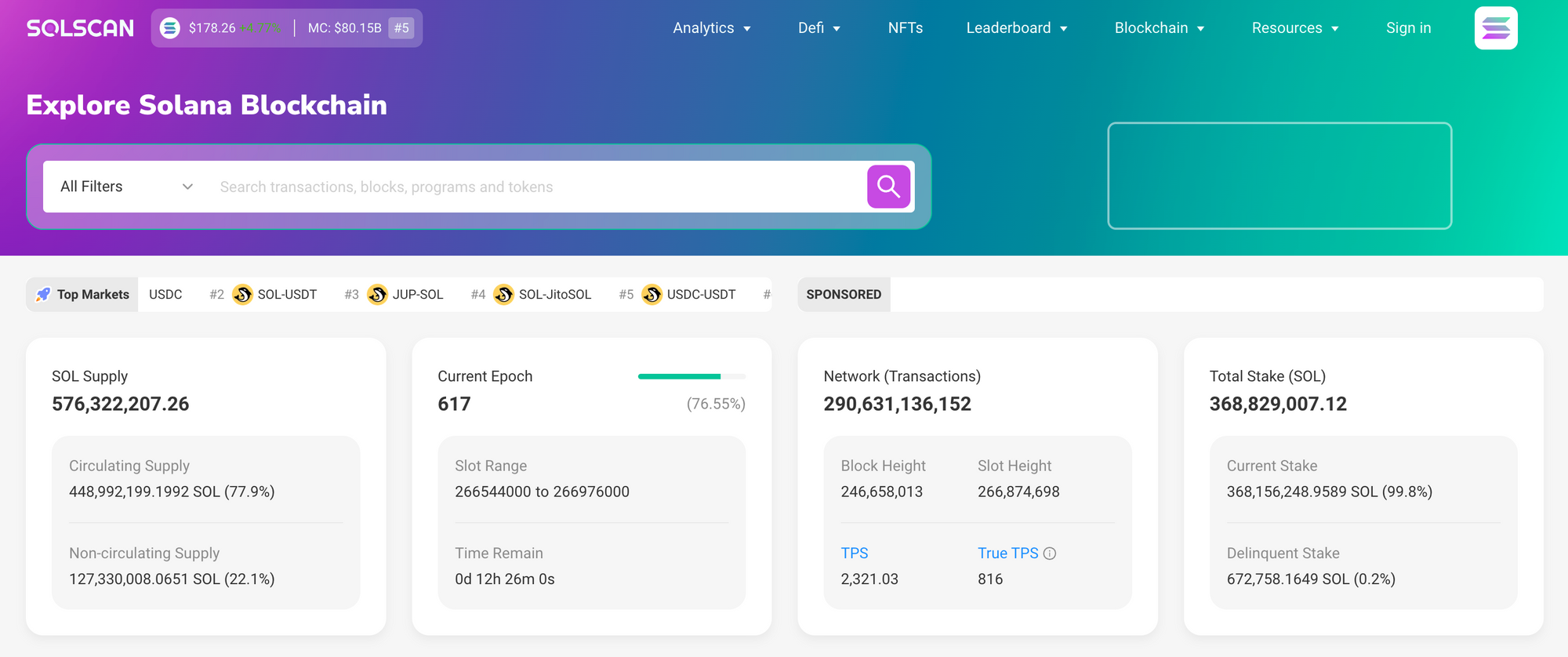
Explorers differ in presentation and extra tooling. I prefer ones that combine raw ledger access with labels, analytics and NFT-specific views. For anyone diving in, start with a recognized site to minimize misidentifying tokens or NFTs. If you want an entry point, check the solscan explorer official site—their token and NFT pages pack a lot of actionable context without feeling overwhelming.
I’m biased, sure. Solscan tends to surface labeled addresses and has a clean transactions trace that I rely on during live drops. That part bugs me less than flaky UIs that hide critical data. Still, no single tool is perfect; cross-checking across explorers and community sources is smart.
Common mistakes I see
People often do these things wrong:
- Trusting token symbols only — two tokens can share a symbol.
- Ignoring decimals and supply — small decimal misreads lead to big math errors.
- Believing labeled addresses without verification — labels can be wrong or outdated.
- Confusing mint address with collection id — they are different.
One more: relying only on price charts. They show what happened, not why. Combine the chart with transaction traces, holder distribution and program interactions for a fuller picture.
FAQ
How do I verify a token or NFT is the real one?
Start with the mint address from the project’s official channel. Then cross-reference that address in the explorer and look at the token’s metadata and creator address. Check recent transactions for official-looking mints and transfers. If available, check the label history and any linked social proofs. If anything feels off, ask in the project’s verified Discord or Twitter—not random DMs.
Can an explorer show me if someone tries to rug?
Yes, sort of. You can spot red flags—sudden large transfers to unknown wallets, mass liquidations, and token burn patterns. But you won’t always get an advance signal. Use alerts and monitor top holders. If top holders dump unexpectedly, that’s often the first on-chain sign of trouble.